How to choose a profession is one of the quiet decisions that can shape years of daily life. People talk about the decision as if it is a single dramatic moment, but it usually behaves more like a long negotiation between your energy, your skills, your finances, and the kind of life you want outside work. I have seen people choose a path because it sounded impressive, then spend the next few years trying to make the work feel less heavy. I have also seen people choose a less glamorous route that fit their rhythm so well that they grew faster than anyone expected.
This article is meant to make that decision easier to think about. Not easier in the sense of a magic answer. Easier in the sense of clearer, calmer, and more grounded in real life. The goal is to help you compare options without getting trapped in status, panic, or other people’s expectations. If you want another angle while you read, the companion guide on our site sits here: choice of profession.
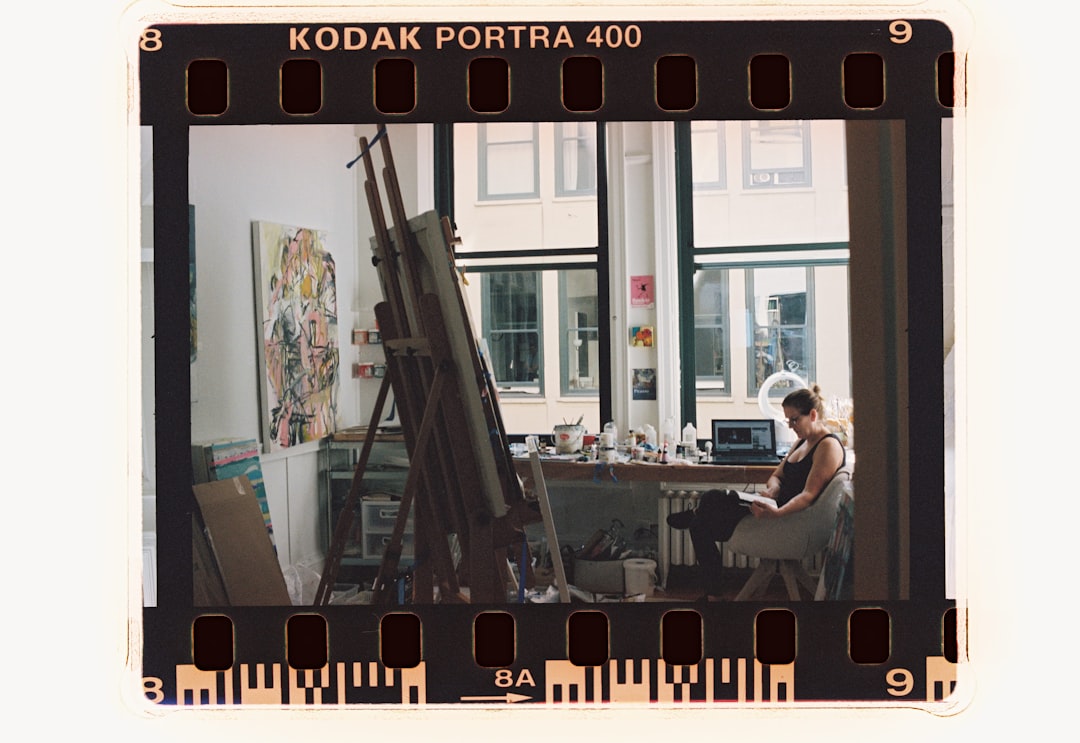
What matters most is not whether a profession sounds impressive in a conversation. What matters is whether it gives you enough energy to keep going, enough room to grow, and enough stability to build a life around it. That is a much better question than, What should I be when I grow up?
It is also a more honest one.
Why the question feels heavier now
It used to be easier to imagine a profession as a ladder. You picked a direction, climbed for a while, and expected the rungs to stay in place. That picture is less reliable now. Industries change. Tools change. Hiring habits change. Even the meaning of a role can shift inside a few years. The pressure to choose now carries an extra weight because people do not just want a good job. They want a choice that will still make sense after the next wave of change.
That is one reason the question feels so emotional. A profession is tied to income, identity, routine, social status, and the way other people describe you at gatherings. No one likes admitting that work affects all of those things at once. It feels safer to reduce the decision to a single factor, like salary or passion, but that usually creates new problems later.
I think the real challenge is that many people are trying to decide while standing inside other people’s timelines. Parents want reassurance. Friends seem ahead. Online stories make the unusual path look normal. Then the decision starts to feel bigger than it really is. You are not only choosing a profession. You are also trying to protect your self-image from regret.
That is a lot of pressure for a single choice, which is why the choice becomes fuzzy. People ask everyone else for opinions, hoping certainty will arrive from the outside. It rarely does. Certainty usually shows up in fragments. One task feels natural. One schedule feels tolerable. One conversation with someone in the field sounds more real than all the research you did late at night.
So I start with a quieter question. What kind of work would make a normal Tuesday feel manageable? That question sounds small, but it cuts through a lot of noise. If a profession cannot survive an ordinary day, it probably will not survive your life.
How to choose a profession without guessing
When I hear someone ask how to choose a profession, I usually think they are asking for certainty. What they really need is a way to replace guessing with evidence. The evidence does not have to be huge. It just has to be real. A conversation with someone in the field, a short project, a volunteer shift, a class assignment, or even a mock version of the work can teach you more than weeks of abstract thinking.
The first move is to stop treating every profession as a full identity package. A title like designer, analyst, nurse, teacher, sales rep, editor, or mechanic is too broad to be useful on its own. The title hides the actual tasks. Two people can hold the same title and live very different workdays. One person spends hours solving complex problems. Another spends hours in meetings. One works alone. Another is in constant contact with people. One faces long feedback loops. Another gets instant results.
That is why I like to break the decision into smaller questions.
- What tasks give you energy instead of draining it?
- What kind of pressure do you handle well?
- Do you prefer short cycles or long cycles?
- Do you like visible results, or are you fine with slow outcomes?
- How much people contact feels natural to you?
- Do you want structure, or do you want room to improvise?
Once you answer those questions, some professions start to look obviously better than others. Not because they are better in general, but because they fit the way you work. That distinction matters. A role that is perfect for one person can be exhausting for another.
The biggest mistake is choosing a profession from a distance. Distance makes almost everything look cleaner than it is. A job can look creative, flexible, and meaningful from far away, then turn into a pile of tiny frustrations once you are inside it. So test the work before you attach your future to the title.
Look at energy before you look at prestige
Energy is one of the best clues you have, and people ignore it more than they should. I do not mean inspiration. Inspiration is nice, but it comes and goes. I mean the deeper kind of energy, the one that tells you whether a task gives you momentum or slowly empties you. Some people finish a day of focused analysis and feel alert. Others finish the same task feeling like they have been scraped thin. Some people love moving between people and problems. Others need quiet and repeated focus to think clearly.
When you are comparing professions, pay attention to what happens after the task, not just during it. A role may look exciting in theory, but if it leaves you flat by the end of the day, the long-term cost is high. That cost often shows up in ways people do not connect to the profession at first. Sleep gets worse. Concentration gets patchy. Mornings become heavier. The job still functions, but you have to push yourself through it more and more often.
Try keeping a simple energy log for one week. Not a productivity journal. An energy log. Write down the kind of work you did and how you felt right after it. Use plain words like sharp, foggy, restless, calm, irritated, focused, or drained. Then compare the entries.
You may notice patterns like these.
- Talking to one person at a time gives you energy, but group settings wear you down.
- Writing detailed notes feels easy, but live improvisation feels costly.
- Physical tasks settle your mind, while open-ended brainstorming leaves you scattered.
- Technical problem solving gives you a steady focus, while repeated small interruptions are hard to handle.
That kind of pattern is more useful than a personality label. People say they are introverted, extroverted, creative, or analytical, but those words are too broad to steer a life decision. Energy is more specific. It tells you what your system is ready to repeat.
If a profession lines up with your energy pattern, you are more likely to stay alert, learn faster, and recover better after hard weeks. That does not make the work effortless. It just means the effort is sustainable.
Match strengths to tasks, not titles
Titles are tidy. Tasks are real. When people say they want to work in marketing, finance, education, healthcare, media, design, or technology, I want to ask a follow-up question immediately. Which tasks inside that field do you actually want to do? The answer changes everything.
Take marketing. One person might love customer research. Another might prefer writing headlines. Another might enjoy campaign analysis. Another might like partnerships, events, or brand strategy. All of those sit under the same umbrella, but they demand very different strengths. The same is true for almost every field. The label on the door is not the job. The job is the work inside the door.
So I would map your strengths against tasks instead of against professions. Write down the activities you already do well, then write down the activities that leave you tense, scattered, or slow. Be specific.
- Instead of communication, write explaining a complicated idea in a simple way.
- Instead of organization, write keeping five moving parts visible without losing track.
- Instead of creativity, write building a new concept from a blank page.
- Instead of problem solving, write debugging a mess until the real issue appears.
Now compare those tasks with the daily work inside each profession you are considering. This step saves people from a lot of regret. Sometimes they discover that the profession they wanted is packed with tasks they dislike. Sometimes they find a field they dismissed because the title sounded ordinary, only to realize that the core tasks fit them beautifully.
You can do the same with your weak spots. Not to shame yourself, but to see what kind of workload you should respect. If long, public speaking sessions exhaust you, then a profession built around constant presentations may not be kind to you. If open-ended ambiguity makes you freeze, a role with no structure may not be a fit. If repetitive detail work grinds you down, that matters too.
One practical rule helps here. Choose a path where your strengths appear often enough to carry the weight of your weak spots. That is a better standard than trying to find a profession that uses every strength and never touches a weakness. Real work does not work that way.
Study the day, not the dream
People usually fall in love with the dream version of a profession first. They imagine the outcome, the social meaning, the freedom, the creative payoff, or the status. Those things matter, but they are not the whole picture. The real test is what the ordinary day feels like.
Ask yourself what a normal Tuesday looks like in that profession. What time does the work start? How much of the day is spent alone? How much is spent in meetings? How often do deadlines arrive? Is the work predictable or reactive? Does the role reward deep focus, quick response, physical stamina, patience, or social energy? What happens when something goes wrong?
Those are not small questions. They are the daily texture of the profession. A job may sound inspiring from a distance and still be wrong for your life if the rhythm does not fit. The rhythm matters more than people expect. If the workday matches your natural pace, the job feels lighter. If it fights your natural pace, everything feels heavier than it should.
I like to imagine the work in ordinary scenes. Not the promotion. Not the award. Not the big launch. Just the middle of a random week. You are answering emails, handling a small fire, trying to stay focused after lunch, and looking at the clock one more time than you would like. If that scene feels manageable, the profession may be a fit. If it already feels draining in your imagination, I would pay attention.
It helps to talk to people who actually do the work. Ask them what surprised them after the first year. Ask what a bad day looks like. Ask what they wish they understood before starting. People often reveal the truth only when the question gets concrete. You are not looking for a polished pitch. You are looking for the texture of a real workday.
There is also a difference between work that is hard and work that is mismatched. Hard work can still feel good if the structure suits you. Mismatched work can feel draining even when the tasks are easy. That difference is one reason the day matters more than the dream.
Use a simple scorecard to compare options
Once you have a few possible directions, you need a way to compare them without letting mood decide everything. A scorecard is useful because it forces the tradeoffs into the open. It does not produce truth by itself, but it helps you think clearly when every option has a convincing story attached to it.
Here is a simple scorecard I would use.
- Energy fit. Does the work leave you steadier, or does it flatten you?
- Skill match. Are you already decent at the core tasks?
- Interest. Would you still care about the work after the first month?
- Lifestyle fit. Does the schedule work for the life you want?
- Income reality. Is there a real path to earning enough?
- Learning curve. Can you improve without feeling buried?
- Long-term flexibility. Can the skills move with you?
You can rate each option from one to five, or simply sort them into strong, mixed, and weak. I prefer simple categories when people are feeling overwhelmed. Numbers can help, but too much precision creates fake certainty. A mixed rating with a note beside it is often more honest than a neat score that hides uncertainty.
The scorecard works best when you write down the reason next to each rating. If you give a profession a high energy fit score, say why. If you think the learning curve is steep, say where the friction is. The explanation matters as much as the number because it lets you review your thinking later.
Here is a useful way to read the results.
- A profession with strong interest but weak energy fit may be fine as a hobby, side project, or short-term experiment.
- A profession with strong income but weak lifestyle fit may work for a season, but it needs a clear reason.
- A profession with strong energy fit and decent income potential is often the most stable candidate.
- A profession with a painful learning curve but strong long-term flexibility may be worth the stretch.
The scorecard also reveals what you value most. Some people care most about flexibility. Some care most about income stability. Some care most about creative room. Some care most about technical depth. Once that becomes visible, the decision gets less mystical and more practical.
How to choose a profession by testing it before you commit
Testing matters because real contact beats speculation. People often try to think their way into certainty, but a small amount of experience can tell you things that long research cannot. You do not need a perfect trial. You need enough exposure to notice how the work feels when it is real.
There are many ways to test a direction. You can take a short course and finish the assignments. You can shadow someone for a day. You can volunteer for a project that uses similar skills. You can build a small sample of the work on your own. You can interview three people in the field and ask them about their routines. You can even simulate the work for a week and watch your own reaction.
What should you pay attention to during the test? Not excitement every minute. That is unrealistic. Look for signs of fit. Do you lose track of time? Do you want to do another round after making a mistake? Does the task feel clearer the second time you do it? Do you feel curious after friction, or only tired? Do you feel like you are learning a language you want to keep speaking?
I like the idea of three short sessions. Do the closest possible version of the work three times on different days. After each session, write down three things.
- What energized me?
- What annoyed me?
- What felt easier than I expected?
Those notes are often more valuable than a general impression at the end of the week. A profession can look attractive while you are talking about it and feel completely different when you are doing the work. A short test makes the fantasy lose some of its grip.
Testing also shows you what kind of repetition you can handle. Most professions are not one brilliant day followed by freedom. They are a set of repeated tasks. If the repetition feels acceptable, the path has a better chance. If the repetition already feels like a burden, that is useful information too.
And if you are torn between two directions, test both in small ways. Do not wait for a dramatic sign. Build evidence. One afternoon in the work is better than fifty opinions about the work.
Money, stability, and the real cost of a path
Money matters. I do not think pretending otherwise helps. A profession has to support real life, which means rent, food, transport, tools, family responsibilities, savings, and the occasional unexpected bill. If a path cannot cover those basics, stress will creep into every other part of the decision.
At the same time, money should not be the only voice in the room. A high-paying role that leaves you depleted can become expensive in ways that are hard to measure. A lower-paying role that matches your energy and gives you room to grow can be smarter in the long run than it looks on paper. The point is to understand the tradeoff, not to worship one number.
Ask grounded questions.
- What is the realistic starting income?
- How long does it usually take to become stable?
- What training, tools, or relocation costs are required?
- How often does income fluctuate?
- What kind of growth looks possible after the first few years?
It also helps to separate survival income from long-term direction. Some people need one path to pay the bills now and another path to grow into later. That is not failure. That is sequencing. A profession does not have to answer your whole life at once. It only has to support the next season well enough for you to keep moving.
People get stuck when they treat the income question as either trivial or absolute. It is neither. It is one factor among several, but it is a factor with consequences. If the profession requires too much financial strain, the strain will shape your mood, your margin for error, and your ability to learn. That reality deserves respect.
The cleanest move is to make the numbers visible. Write down a basic monthly budget. Compare that to the likely income range of the profession. Then ask whether you can live with the gap, and for how long. If the gap is too large, the idea may still be useful, but maybe not as a first step.
That kind of honesty can be sobering. It can also be relieving. A fuzzy fear becomes a clear question, and clear questions are easier to answer.
What people get wrong when they choose too fast
One mistake is choosing for prestige. People want a title that sounds impressive because they want respect, approval, or proof that they made a serious choice. That is understandable. But prestige does not automatically translate into a livable workday. A role can look excellent from the outside and still be a mismatch inside.
Another mistake is copying someone else’s path without copying their context. You might admire a friend, a sibling, a mentor, or a person online and assume their profession should work for you too. But people arrive at roles with different strengths, different responsibilities, different networks, and different tolerance for risk. A path that fits their life can be a poor fit for yours.
People also overvalue certainty. They want to be fully sure before moving. The problem is that certainty usually comes after contact, not before it. If you wait for perfect clarity, you may stay stuck longer than needed. It is often better to make a decent decision, learn from it, and adjust with better information.
There is also the mistake of treating discomfort as proof of wrongness. Some discomfort is normal. Learning feels awkward. New work feels awkward. Being a beginner feels awkward. The real question is whether the discomfort is productive or corrosive. Productive discomfort says you are stretching. Corrosive discomfort says the work is slowly draining you in a way that does not seem to lead anywhere useful.
Another trap is ignoring the future version of yourself. People decide for the version of them that exists this month. That can lead to choices that work in the short run and feel surprisingly expensive later. A profession is not just a paycheck. It shapes your habits, your social world, your confidence, and your sense of identity. That is why the decision deserves more than a quick reaction.
If you want to slow yourself down just enough to see more clearly, ask three questions.
- Who benefits from this choice right now?
- What hidden costs am I not counting?
- Does this path fit the life I am actually trying to build?
Those questions are not glamorous, but they are useful. They pull the decision back into reality.
A 90-day decision sprint for the undecided
Sometimes the honest answer is that you still do not know. That is fine. It means you need a better next step, not a dramatic revelation. One of the most practical ways to move forward is to shrink the decision into a 90-day experiment instead of a permanent verdict.
For the next 90 days, choose one direction to explore seriously. Not forever. Just seriously. Learn the core skills. Talk to people already doing the work. Build a small project. Read enough to understand the daily reality. Try to experience the field from the inside instead of from the sidelines.
At the end of the 90 days, review the evidence. Did your energy improve or get worse? Did your interest deepen after the novelty wore off? Did the work feel more natural than you expected? Did the market look stronger or weaker up close? Did the workday fit the kind of life you want?
That kind of experiment helps because it replaces vague anxiety with observable progress. You are no longer asking, What is the perfect profession? You are asking, What did the last 90 days teach me? That is a more answerable question.
You can make the sprint more useful by setting simple checkpoints.
- Week 1 and 2, learn the basic language of the field.
- Week 3 and 4, speak to one person who works in it.
- Week 5 and 6, complete a small project or practice task.
- Week 7 and 8, compare the field with one alternative.
- Week 9 and 10, review the financial and lifestyle fit.
- Week 11 and 12, decide whether to continue, adjust, or switch.
This kind of structure helps when you feel mentally stuck. It keeps the decision moving without forcing a final answer too early. It also reduces the risk of overthinking because the next step is always clear.
And if you still feel torn after 90 days, that is not a failure. It may mean you need another round with better questions. Most people do not find a perfect answer in one pass. They build the answer piece by piece.
Build a profession that can evolve with you
The strongest profession choice is usually not the one that freezes your future. It is the one that gives you room to adapt. Life changes. Your responsibilities change. Your interests change. The world changes. A good profession gives you enough range to move with those changes instead of breaking against them.
That is why I like to think in terms of reusable skills. Communication, analysis, organization, sales, design sense, technical fluency, teaching, and project management can travel across roles. If a profession builds a skill stack instead of a narrow identity, you gain more options later. That matters because the first choice rarely has to be the last choice.
You can ask a useful question here. Does this profession let me specialize, move sideways, change industries, start something on my own, or combine with another skill later? If the answer is yes, the path is more resilient. If the answer is no, the path may still be worth choosing, but the limit should be clear.
I also think it helps to choose work that can be shaped. Some fields are rigid. Others allow you to niche down, move into leadership, freelance, consult, teach, or build something adjacent. The more shape the profession allows, the easier it is to keep it aligned with your life as your life changes.
There is a kind of fear that says one decision will define everything. I do not buy that. A profession matters, but it does not trap you in stone. It is a starting structure, not a final verdict. The point is to choose something good enough to support your current life and flexible enough to support the version of you that comes next.
If you want the shortest answer I can give, here it is. Choose a profession that fits your energy, rewards your strengths, makes sense on an ordinary Tuesday, and leaves you room to grow. That is a sturdier standard than chasing the loudest title in the room.
When the decision is finally yours, do not make it dramatic. Gather evidence. Compare the options. Test what you can. Read the workday, not just the label. Then move. A profession chosen with care is not a perfect ending. It is a workable beginning.