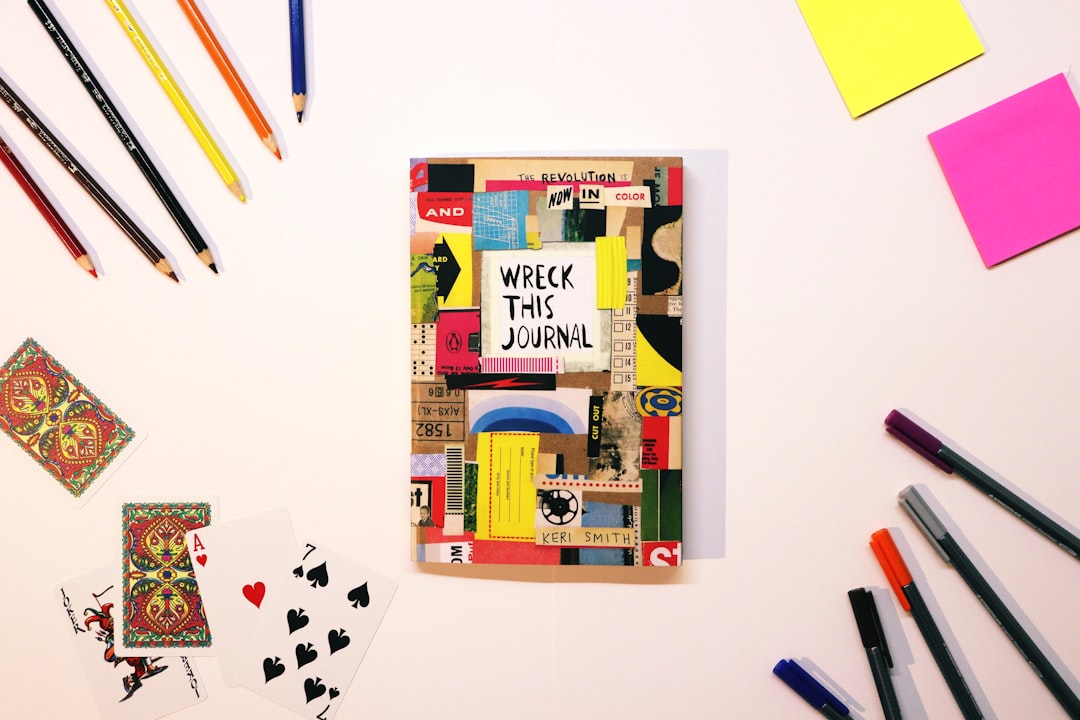
A daily journaling routine gives scattered thoughts a place to land. I do not mean writing three perfect pages before sunrise or filling a notebook with impressive reflections. I mean creating a small, repeatable space where you can notice what happened, decide what matters, and record the next useful move. The value comes from returning to the page often enough that your thoughts become visible instead of running quietly in the background.
Most people do not lack opinions about their lives. They lack a reliable way to sort those opinions. A difficult conversation sits beside an unfinished task, a half-formed ambition, and a worry about next month. Writing gives each thought an edge. Once a thought becomes a sentence, you can examine it. Is it a fact, an assumption, a prediction, or a tired reaction?
This guide focuses on practical journaling rather than attractive stationery or complicated systems. You will find ways to choose a purpose, build a small routine, use morning and evening pages, review decisions, spot patterns, and maintain the habit when your schedule becomes uneven.
Why a daily journaling routine supports clearer thinking
Writing slows thought just enough to make it easier to inspect. A concern that remains in your head can feel enormous because it has no clear boundaries. On paper, it becomes a sentence. The sentence can be questioned, revised, or connected to a specific action.
This makes journaling more useful as a thinking practice than as a simple record of events. A diary might say that a meeting went badly. A reflective entry asks what happened, what you contributed, what you could not control, and what you want to do differently next time.
The page also creates distance between a feeling and a decision. If I write, “I feel ignored,” I have recorded an experience. If I write, “Everyone is against me,” I have turned that experience into a broad conclusion. The first statement leaves room for questions. The second may close the investigation before it begins.
A written record also gives you a longer view of your behavior. On a difficult day, memory often gives the latest disappointment too much weight. Old entries can show earlier decisions, unfinished questions, and small improvements that would otherwise disappear.
There is no special power in a particular notebook. The useful part is the repeated process. You pause, describe reality with reasonable accuracy, and choose a response. Repeating that sequence can make it easier to access when life becomes noisy.
Choose a purpose before choosing a notebook
Many journaling attempts fail because the writer adopts a format before deciding what the format should accomplish. A gratitude page, a productivity log, a freewriting notebook, and a decision journal serve different purposes. None is automatically the right choice.
Start with one practical reason. You might want to clear your head before work, prepare for difficult conversations, understand why projects stall, or create a calmer boundary between work and home. Write that purpose inside the cover in plain language.
A useful purpose statement might be, “I use this notebook to notice what matters and choose my next step.” It is specific enough to guide the practice without making an inflated promise about who you will become.
If your purpose changes, change the format. A single notebook can hold several modes, but using one mode at a time keeps the practice manageable. I prefer a short morning page for direction and an evening page for review. During a major decision, I add a separate section so daily emotions do not get confused with long-term evidence.
Match the format to the problem. If your mind is crowded, use free writing. If your day lacks direction, use a priority page. If you keep repeating the same mistake, use an event review. If you are choosing between options, use a decision page with assumptions and tradeoffs.
Build the smallest version you can repeat
The best routine is rarely the most ambitious one. It is the version that survives a late night, a crowded calendar, and an ordinary Tuesday. Set a minimum that feels almost too easy. Five minutes and three sentences are enough to begin.
A simple minimum can answer these questions.
- What is on my mind right now?
- What matters most today?
- What is one action I can take?
Some days you will write much more. That is fine, but extra writing should be a choice rather than an entry fee. If the routine requires thirty minutes, perfect silence, a special pen, and a carefully arranged drink, ordinary life will interrupt it often.
Keep the minimum visible. Put a card beside the notebook or save the prompts as a pinned note. The aim is to remove the need to remember how to journal. When the first step is obvious, resistance has less room to bargain.
Separate a minimum from a target. The minimum protects continuity. The target gives you room for deeper work when time allows. A five-minute minimum with a fifteen-minute target is more durable than a fifteen-minute minimum that you avoid whenever the day feels difficult.
You can also create a low-energy version. On a difficult day, write the date, one honest sentence, and one next action. This keeps the routine connected to real life rather than making it dependent on having a clear mind.
Attach the practice to an existing action
Time of day matters less than a stable cue. Attach the notebook to something you already do. Open it after making coffee, before checking messages, after lunch, or when you plug in your phone at night.
Morning writing works well when you wake with competing priorities. It gives the day a direction before other people place demands on it. Evening writing works well when your mind keeps replaying unfinished events. It gives those thoughts a place to wait until tomorrow.
Do not assume mornings are morally better. A parent with a full house, a shift worker, or someone who thinks clearly at night may need a different window. Choose the time you can protect without creating conflict with your actual responsibilities.
Use a visible cue during the first few weeks. Leave the notebook on the table, place it beside your keyboard, or keep it inside the bag you take to work. Make the desired action easier to see than the distractions competing with it.
Create a backup cue as well. If morning writing fails because you oversleep, use the first quiet ten minutes after lunch. If evening writing fails because the household is busy, write before dinner. A routine with one rigid opportunity is fragile. A routine with a primary cue and a backup cue has room to recover.
When you miss a day, resume at the next available cue. Do not spend twenty minutes reconstructing the gap. A missed entry is information about the routine, not a verdict about your character.
Use a morning page to aim your attention
A morning page does not need to make you optimistic. Its job is to establish an honest starting point. Some mornings you will feel focused. Others will begin with poor sleep, irritation, or uncertainty. Recording the starting point helps you make a realistic plan instead of pretending to have unlimited energy.
My preferred morning structure has four parts. I name my current state, identify the main obligation, choose a small action, and mark one boundary. For example, I might write that I feel scattered after a short night, that the client proposal matters most, that I will draft the opening section before ten, and that I will keep email closed until the draft exists.
The boundary may be the most useful line. Goals tell you what to pursue. Boundaries tell you what will receive less access to your attention. Ten goals can still produce a drifting day. One important task and two clear limits often create a more coherent plan.
Try these prompts when the page feels empty.
- What deserves my best attention today?
- What would make the day feel well used?
- What am I tempted to avoid?
- What can wait without causing a real problem?
- What would make today harder than necessary?
- What decision would make the rest of the day simpler?
Do not turn every answer into a task. Some answers are observations. The point is to see the day clearly enough to make a sensible choice.
Keep the plan small enough to remember without reopening the notebook. Choose one anchor action, two optional tasks, and one boundary. If the anchor action has not started by midday, rewrite it as a smaller step instead of carrying the original wording around as a source of guilt.
Use an evening review to learn from the day
An evening review should be short and specific. A full inventory of every event can keep you mentally at work. The useful question is what the day can teach you about your decisions, habits, environment, and assumptions.
Divide the page into four notes. Record one thing that moved forward, one moment that consumed more attention than expected, one choice you would repeat or revise, and one priority for tomorrow.
Suppose you planned to read for an hour but spent the evening switching between videos and messages. A vague entry might say, “I wasted the evening.” A more useful entry might say, “I sat on the sofa with my phone in reach and no clear stopping point. Tomorrow I will put the phone in the hallway before reading.” The second entry identifies a setting and a possible adjustment.
Be careful with harsh labels. Calling yourself lazy, weak, or hopeless may feel honest, but those labels rarely explain what happened. Describe the behavior, the trigger, and the consequence. Specific language gives you something to work with.
End with a next action that takes less than fifteen minutes. You might open the document, lay out exercise clothes, reply to one message, or write the first question for a meeting. A small starting point lowers the cost of tomorrow.
Keep the review separate from self-punishment. The page is for learning, not for producing a dramatic confession. If the same problem appears repeatedly, move from description to design. Change the environment, reduce the number of decisions, or ask another person for practical support.
Separate facts, stories, and choices
One of the strongest journaling techniques separates three layers that the mind often blends. The first layer is what happened. The second is the meaning you assigned to it. The third is what you plan to do next.
Imagine that a colleague does not respond to your message. The fact is that there has been no reply since Tuesday afternoon. The story might be that the colleague is annoyed or that your request was foolish. The choice could be to send a concise follow-up on Thursday morning and continue with work that does not depend on the reply.
This separation does not require pretending that feelings are irrelevant. Feelings are data about your current experience, but they are not always accurate forecasts. You can write, “I feel excluded,” without concluding, “I am being excluded.” That difference keeps an emotion visible without turning it into a final explanation.
Create three headings when a situation feels charged.
- What I know.
- What I am assuming.
- What I can choose.
Use the first heading for observable details. Use the second for interpretations and predictions. Use the third for actions within your reach. This format is helpful before difficult conversations, purchases, career decisions, and responses to criticism.
Review the assumptions later. Which ones became facts? Which ones did not? Which questions could have been answered by asking directly? This turns vague worry into a list of information gaps.
The method also exposes the hidden cost of unclear thinking. If you cannot name what you know, your plan may be built on a story. If you cannot name your choice, you may be waiting for certainty that will not arrive.
Turn large goals into visible next actions
Journaling becomes frustrating when every page repeats a goal without translating it into behavior. “Build a business,” “get organized,” and “be more confident” may matter, but they are too large to schedule as single actions.
Use the page to shrink the goal. Ask what evidence of movement would exist by the end of the day. For a writing project, that might be a rough outline and five hundred unedited words. For a home project, it might be one cleared shelf and a donation bag by the door. For a relationship, it might be a direct invitation instead of another private rehearsal.
A useful test is whether the action has a verb, an object, and a stopping point. “Work on the proposal” is vague. “Draft the pricing section in the shared document before lunch” is visible. “Learn Spanish” is vague. “Review ten flashcards after dinner” is visible.
Do not confuse detail with realism. If your page contains twelve ambitious actions, it may be expressing anxiety rather than strategy. Choose one anchor action and a short list of optional tasks. Completing the anchor protects the day when everything else changes.
When an action keeps being postponed, study the resistance. The task may be unclear, emotionally expensive, poorly timed, or no longer worth pursuing. Rewrite it as a smaller experiment. If the experiment still feels wrong, record that information and reconsider the larger goal.
A project page can use four questions. What outcome am I pursuing? What is the next visible action? What could interrupt it? When will I review the plan? The last question matters because a plan without a review date quietly becomes a permanent obligation.
Use a decision journal before the outcome is known
A decision journal preserves your reasoning before the outcome is known. People often judge decisions only by what happened afterward. A sensible choice can produce a poor result, and a careless choice can get lucky. Recording your reasoning helps you examine the process rather than worship the outcome.
Before making a meaningful decision, write the situation, the options, the information available, the main risks, and what would change your mind. Add a confidence estimate such as “moderately confident,” then explain why. Avoid false precision unless numbers genuinely help.
For a work decision, you might compare staying with a current project, requesting a different role, or looking for another position. Record the tradeoffs you understand, the questions you still need answered, and the time horizon. When you revisit the page three months later, you can see which assumptions held and which did not.
Use a cooling-off page for choices made under strong emotion. Write the first reaction, wait several hours or a night when possible, then write the considered response. The gap does not create wisdom by itself. It gives you two snapshots instead of one.
Separate reversible and hard-to-reverse decisions. For a reversible choice, set a short trial period and a review date. For a harder decision, spend more time gathering information and speaking with people who understand the situation. The journal can organize your questions, but it should not replace appropriate professional advice.
Do not use the page to search for a perfect answer. Most meaningful choices involve incomplete information. The practical aim is to make your reasoning visible, identify the most important uncertainty, and select a next step that preserves useful options.
Review patterns once a week
Daily entries become more useful when you review them. Set aside twenty to thirty minutes once a week. Read quickly at first. Mark repeated concerns, recurring commitments, moments of energy, and tasks that keep moving from one page to another.
Look for friction in the environment. Do you plan focused work during the hour when people usually contact you? Do you promise to prepare at night even though your evenings are unpredictable? Do certain conversations leave you distracted for the rest of the day? Patterns point toward adjustments that motivation alone may not supply.
Look for capability too. Perhaps you handled a tense call more calmly than last month. Perhaps you finished a task you had postponed. Perhaps you changed your plan without treating the change as failure. These details matter because progress is often quiet.
End the review with three decisions. Choose one practice to continue, one source of friction to reduce, and one experiment to run next week. Call it an experiment because the result is information, not a judgment of your worth.
Keep the weekly review separate from a performance score. Scores can help with a specific project, but rating your entire life each week creates unnecessary theatre. Ask whether your choices matched your stated priorities and what adjustment would make that easier.
Use a simple review table if you prefer structure. Record the pattern, the likely trigger, the cost, the smallest adjustment, and the date you will check it. For example, “late replies, phone beside notebook, lost forty minutes, phone in another room, check Friday.” This turns reflection into a small design cycle.
Choose prompts that create useful answers
Prompts help when they narrow attention without dictating the conclusion. Rotate them according to the problem in front of you. If you use the same question every day, it may become wallpaper.
For clarity, ask, “What am I avoiding naming?” or “Which part of this situation is actually uncertain?” For focus, ask, “What would make the next hour count?” For relationships, ask, “What do I want the other person to understand, and what have I not said clearly?”
For creative work, ask, “What would I make if the first version could stay private?” For self-respect, ask, “Where did I keep a promise to myself?” For flexibility, ask, “What plan can I adjust without abandoning the larger aim?”
For a demanding week, ask, “What can be made simpler tomorrow?” For a stalled project, ask, “What is the smallest piece that can exist by the end of this session?” For recurring worry, ask, “What information would change my view, and how could I obtain it?”
Make a prompt bank on the last pages of the notebook. Group questions by situation rather than abstract virtue. Categories such as difficult conversation, uncertain decision, stalled project, weekly review, and fresh start are easier to use than categories such as courage or excellence.
When a prompt produces the same answer repeatedly, do not force a more interesting response. Repetition may show you a problem that deserves action outside the notebook. Journaling prepares you for life. It does not replace participating in it.
Compare paper, digital, and hybrid systems
Paper is useful when screens pull you toward messages, tabs, and unfinished work. It makes the page feel separate from the stream of information. A basic notebook is enough. Choose a size that fits where you will use it, and leave room for imperfect handwriting.
Digital journaling is useful when search, tags, timestamps, or portability matter. It can be easier to review months of entries and find a project name or recurring question. A plain text file may be better than a complicated app if the app becomes another system to maintain.
A hybrid system can work well. Use paper for morning thinking and a digital weekly review. Or use a private digital file for decisions that benefit from search and a pocket notebook for observations during the day.
Choose paper when you want fewer notifications and more physical separation from work. Choose digital when you travel often, need fast search, or want to link entries to project files. Choose hybrid when different parts of the practice have different needs.
Privacy deserves practical attention. Do not place intimate details in a shared work account. Use a screen lock, understand storage settings, and avoid recording private information about other people that you would not want exposed. A journal should give you room to think without creating avoidable problems.
Do not keep buying tools to postpone writing. The next useful entry can happen in a basic document or on scrap paper. Better equipment may improve comfort, but it does not create reflection.
Handle resistance and missed days
Resistance is normal. You may feel that you have nothing to say, that the day was too ordinary, or that writing will make a difficult issue feel more real. Reduce the entry cost instead of turning resistance into a moral battle.
Begin with an unfiltered sentence such as, “I do not want to write because…” The sentence often opens the door. You may discover that the problem is not a lack of material but a reluctance to admit what you already know.
Use a timer for three minutes. Stop when it ends if you want. The point is to show that the practice does not require a large emotional performance. On another day, you may continue because the thought has become clearer.
If you miss several days, restart with a fresh page. Write the date, describe the present situation, and choose one action. The journal is not a school attendance register.
Some entries will be dull. That is not a defect. A routine that records only dramatic insights will collapse under normal life. Ordinary entries create the background that makes larger patterns visible.
Change the routine when the obstacle repeats. If you keep missing mornings, move the practice to lunch. If entries become long and exhausting, restore the five-minute minimum. If you write but take no action, end each entry with a task that can begin in fifteen minutes.
Protect honesty and useful boundaries
A journal works best when it is private enough for honest thinking and structured enough to produce action. If every entry is written for an imagined audience, you may edit away the uncertainty that matters most.
Privacy does not mean permission to write cruel conclusions about yourself or other people and then call them truth. Use precise language. Describe what was said, what you felt, what you inferred, and what you might ask directly.
Be careful when writing about someone else’s personal information. You can record your experience without copying sensitive details. The goal is clarity, not a permanent archive of every private conversation.
Notice when writing becomes avoidance. If you spend a week analyzing the same email but have not sent a clear reply, the next useful entry may be a draft of the reply. If you keep planning a project but never create a first version, the page should lead to a small piece of work.
Journaling can support action, but it cannot answer every difficult problem by itself. Use it to prepare questions, organize facts, and clarify preferences. Seek appropriate personal, professional, or community support when the situation exceeds what private reflection can reasonably handle.
Create a four-week starter plan
During week one, write for five minutes after one stable daily cue. Use the three basic prompts and ignore style. Your task is to learn when and where writing fits.
During week two, keep the morning or evening format and add one line that identifies a boundary. Notice what steals attention or creates unnecessary friction. Do not redesign your whole schedule yet.
During week three, add a weekly review. Read the previous entries and identify one repeated pattern. Choose one small environmental experiment, such as moving the phone, preparing materials earlier, or placing a difficult task in a quieter time slot.
During week four, add a decision page or project review. Ask whether the notebook helps you see facts, choose actions, and learn from outcomes. Keep the parts that work. Drop the parts that feel decorative or burdensome.
At the end of the month, write a brief assessment. What does the journal help you notice? Which prompt produces useful answers? When do you avoid it? What would make the next month easier? These questions turn the routine itself into something you can improve.
For another practical reflection tool, see our weekly review guide and compare its questions with your own notes.
Make the routine belong to real life
The strongest daily journaling routine is modest, private, and connected to decisions you actually make. You do not need to become a writer, wake before everyone else, or buy a sophisticated app. You need a few minutes in which your attention is not rented out to the loudest demand.
Write when the day is ordinary, not only when you are searching for a breakthrough. Record the small choice that worked, the plan that was unrealistic, and the question you still cannot answer. Over time, the pages can show how you spend attention, where plans meet reality, and which changes are worth repeating.
Begin with three sentences. Name what is on your mind. Name what matters next. Name one action that will make tomorrow easier. Then close the notebook and return to the day. The page has done its job when it helps you see the next part of life with a little more room to choose.